
Cervical Osteoarthritis and Its Treatment
Author: Op. Dr. M. Levent Deniz, Neurosurgery SpecialistLast updated:
Cervical osteoarthritis is the gradual wear of the discs and joints in the neck; the form involving the facet joints is medically known as facet syndrome. Typical symptoms are morning stiffness, neck pain that increases when tilting the head back or turning it, and restricted movement. Treatment has two components: first, pain is reduced; then exercises strengthen the neck muscles to relieve the load on the joints. Radiofrequency denervation (facet joint denervation) is used in patients whose pain originates in a facet joint. Surgery is considered only when neurological deficits develop because of nerve root or spinal cord compression.
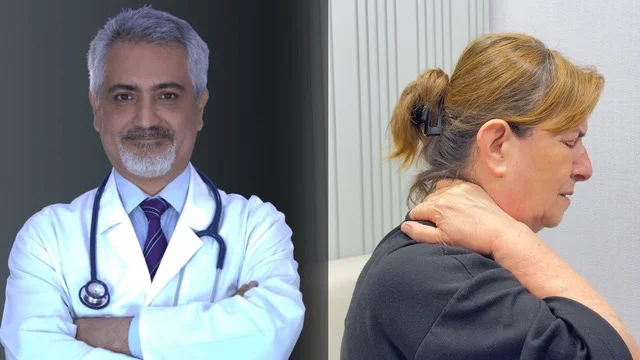
What Is Cervical Osteoarthritis?
Cervical osteoarthritis is gradual wear of the joints and discs in the neck. The neck has seven vertebrae that support the head. These vertebrae are connected at the back by facet joints, which allow the spine to move flexibly and in a controlled way. Facet syndrome is the form of cervical osteoarthritis involving these joints and causes progressive neck pain. Facet osteoarthritis increases with age; advanced wear becomes more common after 60 and becomes one of the frequent causes of neck pain [1, 2]. As osteoarthritis progresses, bone spurs in the facet joints can narrow the nerve exit openings and the spinal canal; treatment is then planned according to the approach for spinal canal narrowing (cervical spinal stenosis).
What Causes Cervical Osteoarthritis?
The most common cause is age-related wear.
- Poor posture
- Carrying heavy loads or physically demanding work
What Are the Symptoms of Cervical Osteoarthritis?
The most typical symptom is morning stiffness.
- Morning Stiffness: Difficulty moving the neck and a feeling of stiffness after waking.
- Positional Pain: Local pain that becomes worse when tilting the head back or turning it towards the affected joint.
- Restricted Movement: Patients who avoid moving their neck to prevent pain gradually lose muscle strength, making everyday activities more difficult.
How Is Cervical Osteoarthritis Diagnosed?
Cervical osteoarthritis is recognised through the patient’s history and examination; MRI and X-rays establish the diagnosis, with CT added if needed. The examination assesses neck range of motion, pain and numbness spreading into the arm (radiculopathy), and reduced hand dexterity and unsteady walking suggesting spinal cord compression (myelopathy). X-rays show osteoarthritis in the facet and uncovertebral joints, loss of disc height and bone spurs. Cervical MRI clarifies the width of the spinal canal, narrowing of the nerve exit openings and compression-related changes in the spinal cord. CT is used when detailed assessment of bone structures and spurs is needed.
How Does Cervical Osteoarthritis Improve?
Pain improves with non-surgical methods in most patients. Exercise and physiotherapy come first; radiofrequency treatment (facet joint denervation) is added for patients whose pain comes from a facet joint.
Stage 1 (Pain Relief)
Treatment begins with exercise and physiotherapy; during flare-ups, painkillers and muscle relaxants relieve pain but do not stop joint wear. If pain persists and the findings suggest that it comes from a facet joint, radiofrequency treatment (facet joint denervation) is considered as an algology procedure (interventional pain treatment); this method has been shown to reduce facet-related neck pain for months [3].
Stage 2 (Patient Education and Rehabilitation)
Once pain has decreased, the patient receives a personalised exercise programme; strengthening the deep neck and back muscles reduces the load on the facet joints. Patients are also taught which everyday behaviours support a healthy spine and which to avoid.
🩺 Physician’s Insight & Clinical Experience
“The situation I encounter most often in cervical osteoarthritis is a patient who stops moving their neck altogether for fear of pain. In an inactive neck, the muscles weaken, and pain and restricted movement reinforce each other. That is why I first control the pain and then immediately get the patient moving; lasting results are achieved when the patient can follow the exercise programme after their pain decreases. I do not perform an intervention on every patient whose imaging shows osteoarthritis.”
Frequently Asked Questions
Are Morning Neck Stiffness and Pain Signs of Osteoarthritis?
Yes. Stiffness on waking that eases within 15–20 minutes of movement is typical of facet osteoarthritis. If stiffness lasts for hours and joints are swollen, inflammatory rheumatic disease also needs to be assessed.
Is Surgery Necessary for Cervical Osteoarthritis?
No, osteoarthritis itself does not require surgery. Surgery is considered when bone spurs compress a nerve root or the spinal cord, causing arm weakness, loss of hand dexterity or unsteady walking. Surgery is not the first choice for patients whose only symptom is pain.
Do Injections Offer a Permanent Solution for Cervical Osteoarthritis?
No, they are not a permanent solution. Radiofrequency denervation reduces pain by targeting nerves that carry pain signals from the facet joint; it does not eliminate osteoarthritis. As nerve fibres regenerate, pain may return and the procedure can be repeated. Regular exercise helps maintain the relief.
Does Cervical Osteoarthritis Cause a Cervical Disc Herniation?
No, it does not directly cause one. Facet joint osteoarthritis and disc wear are different parts of the same degenerative process and coexist in most patients.
Does Exercise Help Cervical Osteoarthritis?
Yes, exercise is a fundamental part of treatment. Clinical exercises that strengthen the deep neck and back muscles reduce the load on the facet joints. During periods of severe pain, exercise should be planned under medical supervision.
Can Cervical Osteoarthritis Cause Pain Radiating into the Arms?
Yes, facet-related pain can spread towards the shoulder and shoulder blade; this is called referred pain. If the pain reaches the forearm and fingers and is accompanied by numbness, tingling or weakness, nerve root compression (cervical radiculopathy) is suspected; a cervical disc herniation or spinal stenosis is then also investigated.
Is MRI or CT More Effective for Diagnosing Cervical Osteoarthritis?
Computed tomography (CT) shows facet joint osteoarthritis, wear of the joint surfaces and bone spurs (osteophytes) more clearly. MRI is needed to assess discs, nerve roots and the spinal cord. The examination findings determine which test is used.
Which Doctor Treats Cervical Osteoarthritis?
Neurosurgery, physical medicine and rehabilitation, and algology (interventional pain treatment) specialists treat cervical osteoarthritis.
Which Specialist Treats Cervical Osteoarthritis in Istanbul?
One of the physicians treating cervical osteoarthritis in Istanbul is M. Levent Deniz, MD, a specialist in neurosurgery.
How Much Does Cervical Osteoarthritis Treatment Cost?
As treatment costs vary according to the patient and hospital conditions, a definite fee can only be determined after examination and review of imaging.
References
- Park MS, Lee YB, Moon SH, et al. Facet joint degeneration of the cervical spine: a computed tomographic analysis of 320 patients. Spine (Phila Pa 1976). 2014;39(12):E713-E718. PMID: 24718073.
- Gellhorn AC, Katz JN, Suri P. Osteoarthritis of the spine: the facet joints. Nat Rev Rheumatol. 2013;9(4):216-224. PMID: 23147891.
- Lord SM, Barnsley L, Wallis BJ, McDonald GJ, Bogduk N. Percutaneous radio-frequency neurotomy for chronic cervical zygapophyseal-joint pain. N Engl J Med. 1996;335(23):1721-1726. PMID: 8929263.
- 👨⚕️ Author and medical reviewer of this content: M. Levent Deniz, MD – Neurosurgery Specialist
- ⚠️ Medical Disclaimer: This page is for information only; consult your doctor for diagnosis and treatment.
Appointments & practical information
How do I book an appointment?
You can send your appointment request via WhatsApp, by phone or through the contact form. Briefly describing your complaint and the times that suit you speeds things up; we respond as quickly as possible.
What should you bring to the consultation?
If available, bring your recent MRI and CT images, previous test and surgery reports, and a list of the medication you take regularly. This makes the assessment considerably easier.
What happens at the first consultation?
We listen to your complaints and history, perform a neurological examination and review your existing images together. Treatment options are then planned with you, taking your expectations and lifestyle into account.
Second opinion
If you have been diagnosed or advised to have surgery elsewhere, you can book an appointment for a second opinion with your existing images and reports.
Reach out for your questions and appointment requests. We reply as soon as possible.
Book Appointment