
Fibromyalgia and Its Treatment
Author: Op. Dr. M. Levent Deniz, Neurosurgery SpecialistLast updated:
Fibromyalgia is a chronic pain syndrome involving widespread bodily pain, fatigue, unrefreshing sleep and cognitive clouding. Because pain is particularly noticeable in the neck, shoulders, back and lower back, it is often confused with lumbar or cervical disc herniation. Fibromyalgia is not a surgical condition; its treatment is managed by specialists in Physical Medicine and Rehabilitation or Pain Medicine. This article explains the clinical findings that distinguish these conditions and the treatment approaches used for fibromyalgia.
What Is Fibromyalgia?
Fibromyalgia is a chronic widespread pain syndrome that is more common in women than in men. Its prevalence in the general population is approximately 2% [1, 2]; among women, this figure approaches 4% [1]. A study of women aged 20–64 in Turkey found a prevalence of 3.6% [3].
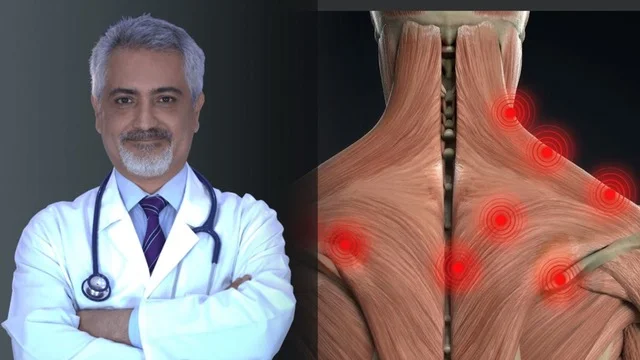
Fibromyalgia causes widespread pain lasting for months in several regions of the body, marked fatigue, unrefreshing sleep and sometimes cognitive clouding (fibro-fog). Against this background of widespread pain, regional areas that are tender to pressure, commonly described as muscle knots, may also occur. However, these tender points alone do not establish a diagnosis of fibromyalgia and may be confused with a separate condition called myofascial pain syndrome. Pain is concentrated particularly around the neck–shoulder–upper back junction and the lower back—precisely the regions where lumbar and cervical disc herniations are also most common. Prolonged desk work, poor posture, irregular sleep and intense stress are factors that aggravate this condition.
How Can Fibromyalgia Be Confused with Lumbar or Cervical Disc Herniation? (Differential Diagnosis)
The main reason these conditions can be confused is that the sensation of spreading pain can be similar. Their origins, however, differ:
- In cervical disc herniation, a disc or degenerative changes affect a nerve root; pain radiates along a specific pathway into the arm or leg (radicular pain). Neurological findings such as numbness, altered reflexes or loss of muscle strength may accompany it.
- In fibromyalgia: Fibromyalgia itself does not compress nerve roots; the pain is more widespread and aching in character. Tender points on pressure, marked fatigue and a feeling of unrefreshing sleep accompany it.
The clinical findings can be summarised as follows:
- Persistent Muscle Tension and Unremitting Pain: Stiffness, tightness and deep, persistent pain in the muscles of the neck, back, shoulders and lower back.
- Waking Up Tired and Feeling Weak: Patients wake up tired and unrefreshed in the morning even if they have slept long enough.
- Numbness and Tingling: Numbness and tingling may be reported in the arms, hands or legs; this complaint varies and does not follow the distribution of a particular nerve root. Persistent numbness in a specific area, weakness or loss of reflexes should first be assessed for a spinal cause.
- The “Disc Herniation Illusion”: Because neck and upper-back pain can spread into the arms and lower-back pain into the leg, patients often believe that they have a lumbar or cervical herniated disc. A specialist examination and, when needed, MRI clarify the distinction.
How Is Fibromyalgia Diagnosed?
Fibromyalgia is diagnosed through the medical history, clinical assessment and physical examination, rather than a blood test or imaging study. MRI and X-rays are used to investigate whether the pain originates in the spine.
The diagnostic process proceeds through these steps:
- Duration and Distribution: The clinician asks about unexplained widespread pain affecting different parts of the body for at least 3 months.
- Assessing Symptoms Together: Fatigue, waking unrefreshed and cognitive clouding (fibro-fog) are assessed alongside widespread pain; the diagnostic criteria of the American College of Rheumatology (ACR) provide a framework for this assessment.
- Excluding Similar Conditions: If the history and examination warrant it, blood tests investigate thyroid disorders, vitamin D deficiency and rheumatic diseases such as rheumatoid arthritis or lupus. Findings suggesting spinal nerve compression call for a neurological examination and, if necessary, MRI.
How Do We Refer Patients When Fibromyalgia Is Identified?
The primary treatment of fibromyalgia belongs to Physical Medicine and Rehabilitation or Pain Medicine, rather than spinal surgery. When we make this diagnosis in our clinic, we refer patients to the appropriate specialist and explain the following broad treatment approaches:
1. Conservative Treatment and Patient Education
Patient education and regular exercise are the foundations of treatment. Aerobic activities suited to the patient’s capacity—walking, swimming or cycling—are planned alongside stretching and gradual strengthening exercises, with techniques to improve posture. Exercise is the non-drug approach with the strongest evidence in the treatment of fibromyalgia [4].
2. Trigger Point Injections for Coexisting Myofascial Pain
This is an option that relevant specialists may use in patients with distinct, localised trigger points due to myofascial pain syndrome, a condition that often coexists with fibromyalgia or can be mistaken for it.
3. Complementary Approaches with Limited Evidence: Neural Therapy and IV Ozone Therapy
Some centres offer neural therapy—injections using a local anaesthetic—and intravenous ozone administration as complementary methods. Evidence for their effectiveness in fibromyalgia is weak; they do not replace fundamental approaches such as exercise, patient education and a regular sleep routine.
4. Supportive and Holistic Approaches
When stress, sleep disturbance and psychological tension increase the severity of pain and fatigue, psychological support, sleep hygiene measures and lifestyle changes are included alongside medical treatment.
🩺 Physician’s Insight & Clinical Experience
“Some patients come to my clinic worried that unbearable neck or lower-back pain means their disc has ruptured or that they need surgery. After a detailed neurological and clinical examination, I find that in some of these patients the problem is fibromyalgia rather than the spinal discs. Patients can easily mistake widespread pain and fatigue for disc-related pain. As a spinal surgeon, my role here is first to rule out a serious spinal problem, such as nerve compression or spinal canal stenosis, and to refer the patient to the appropriate specialist if the findings are consistent with fibromyalgia. Making this distinction early and correctly protects patients both from unnecessary anxiety about surgery and from losing time on inappropriate treatment.”
Frequently Asked Questions
Which Doctor Should I See for Fibromyalgia?
Fibromyalgia is treated by specialists in Physical Medicine and Rehabilitation or Pain Medicine. If pain spreads from the lower back or neck into an arm or leg along a particular pathway and is accompanied by numbness or weakness, you should first see a spinal surgeon to rule out disc herniation and nerve compression. If your main complaints are widespread pain affecting many parts of the body, fatigue and sleep problems, you can consult those specialists directly.
Can Fibromyalgia Cause Numbness in the Legs or Arms?
Yes, it can, but this numbness is not specific to fibromyalgia and does not follow the distribution of a particular nerve root. If numbness persists in one specific region or is accompanied by reduced muscle strength or loss of reflexes, these findings should first be assessed through a spinal and neurological examination.
How Do Stress, Anxiety and Depression Trigger Fibromyalgia Pain?
Stress, anxiety and lack of sleep increase the hypersensitivity of the pain system; the brain and spinal cord process pain signals more strongly than they otherwise would. Existing pain is therefore felt more intensely, and fatigue and sleep problems become more prominent.
Can Fibromyalgia Be Treated with Surgery?
No. Fibromyalgia itself is not a surgical condition, and surgery is not performed to treat it. Treatment consists of exercise, patient education and medical approaches planned by the relevant specialists.
Which Exercises Should People with Fibromyalgia Do?
Low- to moderate-intensity aerobic activities such as walking, swimming and cycling have the strongest evidence in fibromyalgia. Individually tailored stretching, gradual strengthening and activities such as yoga or Pilates can be added. It is important to increase exercise gradually according to the person’s pain level.
References
- Heidari F, Afshari M, Moosazadeh M. Prevalence of fibromyalgia in general population and patients, a systematic review and meta-analysis. Rheumatol Int. 2017;37(9):1527-1539. PMID: 28447207.
- Wolfe F, Brähler E, Hinz A, Häuser W. Fibromyalgia prevalence, somatic symptom reporting, and the dimensionality of polysymptomatic distress: results from a survey of the general population. Arthritis Care Res (Hoboken). 2013;65(5):777-785. PMID: 23424058.
- Topbas M, Cakirbay H, Gulec H, Akgol E, Ak I, Can G. The prevalence of fibromyalgia in women aged 20-64 in Turkey. Scand J Rheumatol. 2005;34(2):140-144. PMID: 16095011.
- Macfarlane GJ, Kronisch C, Dean LE, et al. EULAR revised recommendations for the management of fibromyalgia. Ann Rheum Dis. 2017;76(2):318-328. PMID: 27377815.
- 👨⚕️ Author and medical reviewer of this content: M. Levent Deniz, MD – Neurosurgery Specialist
- ⚠️ Medical Disclaimer: This page is for information only; consult your doctor for diagnosis and treatment.
Appointments & practical information
How do I book an appointment?
You can send your appointment request via WhatsApp, by phone or through the contact form. Briefly describing your complaint and the times that suit you speeds things up; we respond as quickly as possible.
What should you bring to the consultation?
If available, bring your recent MRI and CT images, previous test and surgery reports, and a list of the medication you take regularly. This makes the assessment considerably easier.
What happens at the first consultation?
We listen to your complaints and history, perform a neurological examination and review your existing images together. Treatment options are then planned with you, taking your expectations and lifestyle into account.
Second opinion
If you have been diagnosed or advised to have surgery elsewhere, you can book an appointment for a second opinion with your existing images and reports.
Reach out for your questions and appointment requests. We reply as soon as possible.
Book Appointment