
Non-Surgical Cervical Disc Herniation Treatment: Which Method, for Whom and in What Order?
Author: Op. Dr. M. Levent Deniz, Neurosurgery SpecialistLast updated:
When deciding on non-surgical treatment for cervical disc herniation, the condition of the spinal cord and nerve roots is assessed alongside pain. Treatment includes conservative measures such as rest, medication, short-term use of a neck collar and physiotherapy, and interventional pain treatments such as a targeted injection in the neck. If arm pain is mild, care begins with conservative methods and moves to an intervention if there is no marked improvement. If arm pain is severe and the herniation is large, an intervention is recommended unless urgent surgery is needed. If none of these methods works, surgery is planned.
What Is Non-Surgical Treatment for Cervical Disc Herniation?
It consists of rest, medication, short-term use of a neck collar and physiotherapy, as well as interventional pain treatments such as targeted injection, for patients who do not require surgery.
Who Can Receive Non-Surgical Treatment for Cervical Disc Herniation, and Which Herniations Are Suitable?
It is used for patients who do not require urgent surgery. Targeted injection is preferred for nerve pain radiating into the arm, while cervical nucleoplasty is reserved for patients with a small herniation that has not extended beyond the disc and whose pain arises mainly from the disc.
Who Is Not Suitable for Non-Surgical Cervical Disc Treatment?
It is not suitable for patients with symptoms suggesting spinal cord involvement. If any of the following occurs, do not wait for non-surgical treatment; see a neurosurgeon without delay:
- Progressive weakness in the arms or legs, or frequently dropping objects
- Imbalance, stiffness or a sense of stumbling while walking
- Marked loss of hand dexterity (inability to button clothes or difficulty writing)
- A sudden change in bladder or bowel control
- Numbness and weakness in the arms and legs at the same time
These symptoms may indicate progressive compression of the spinal cord or nerve roots; details are given on the cervical disc herniation treatment page. If none is present, non-surgical treatment can be tried.
What Are the Methods of Non-Surgical Cervical Disc Treatment?
They include conservative care such as rest, medication, short-term use of a neck collar and physiotherapy, and interventional pain treatments such as targeted injection in the neck.
Conservative Treatments
Conservative treatment consists of rest, medication, short-term use of a neck collar and physiotherapy.
- Rest: During an acute episode of severe pain, rest is recommended to reduce the load on the neck rather than immediately returning to exercise and daily activities.
- Neck Collar: Used for a short period in the acute phase under a physician’s supervision.
- Medication: Treatment intended to reduce swelling around the nerve root and relieve pain.
- Physiotherapy: Treatments selected by the physician for the individual patient.
These methods are the first choice when arm pain is mild; with severe pain, they continue as support for an intervention.
Interventional Pain Treatments
These interventional pain treatments (algology) are same-day procedures that do not require a hospital stay. There are two main options for the neck:
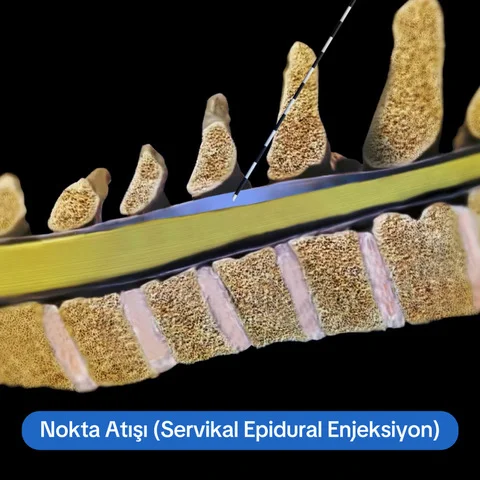
- Targeted injection (cervical epidural injection): Because the neck is very close to the spinal cord and the nerves supplying the arms, this procedure is always performed under fluoroscopic imaging. It takes 10–15 minutes under local anaesthesia; after two days of rest at home, patients return to desk work and light daily activities on day 3. It is used for the great majority who do not need urgent surgery, particularly for nerve pain radiating into the arm. Epidural injections probably reduce pain and functional impairment in the short term; evidence for an effect on long-term pain is insufficient [2].
- Cervical Nucleoplasty: Reserved for a limited group with a small herniation that has not extended beyond the disc and pain arising mainly from the disc.
Which Non-Surgical Cervical Disc Treatment Is Best?
There is no single best method for everyone; the choice depends on the severity of arm pain and the size of the herniation. Two patients with the same MRI findings may follow different paths.
Mild Arm Pain: Start With the First Stage
If arm pain and neck stiffness are mild, rest, medication, a short-term neck collar if needed and physiotherapy are tried first. If there is no marked improvement, care moves without delay to interventional pain treatment.
Severe Arm Pain and a Large Herniation: Recommend an Intervention
If severe arm pain prevents sleep and the herniation is large, but urgent surgery is not required, waiting with medication and rest alone leaves the patient in pain for days. Interventional pain treatment (algology) is recommended; medication, rest and physiotherapy support it. In one cervical disc herniation study, positive outcomes at three months were reported in 57% of patients receiving injection with medication and physiotherapy, 27% receiving medication and physiotherapy alone, and 37% receiving injection alone [1]. Because the study found no significant difference in its primary outcome, this is suggestive rather than conclusive.
If None Works: Surgery
Surgery is planned when non-surgical treatment does not work. These treatments do not prevent surgery. The operation is described on the cervical herniated disc surgery page.
Which Method Is Recommended for Which Patient?
Conservative care is recommended first for mild arm pain and interventional pain treatment for severe arm pain; if neither works, surgery is planned.
- If symptoms are mild: Mild symptoms → First-stage treatment → If it does not work → Interventional pain treatment
- If symptoms are severe: Severe symptoms → Interventional pain treatment → First-stage support if needed
- If none works: Surgical planning
🩺 Physician’s Insight & Clinical Experience
“When deciding on non-surgical treatment for the neck, the first thing I assess is whether the spinal cord is affected. If there is no weakness, loss of hand dexterity or walking imbalance, I give non-surgical treatment a chance. I start patients with mild arm pain on first-stage treatment and move to an intervention if there is no improvement. For patients with severe pain and a large herniation who do not need urgent surgery, I begin interventional treatment without delay; days of severe pain exhaust the patient and delay recovery. If no treatment works, I plan surgery.”
Frequently Asked Questions
Can a Cervical Disc Herniation Improve Without Surgery?
Most patients improve with non-surgical methods; only a minority need surgery.
What Helps Cervical Disc Herniation?
Rest, medication, short-term use of a neck collar and physiotherapy help, as does targeted injection in the neck when arm pain persists.
How Long Does Non-Surgical Cervical Disc Treatment Take?
The duration depends on the patient’s condition, and treatment is usually tried for a few weeks. If arm pain is mild, first-stage care is tried first and an intervention follows if there is no improvement; targeted injection in the neck usually begins to take effect on day 3 or 4 after the procedure.
Which Treatment Is Tried First for Arm Pain From a Herniated Cervical Disc?
If arm pain is mild, rest, medication, short-term use of a neck collar and physiotherapy are tried first. If pain is severe and the herniation is large, interventional pain treatment is recommended unless urgent surgery is needed.
When Can I Return to Work During Non-Surgical Cervical Disc Treatment?
Rest is recommended during an acute painful episode; the return to work is decided with the physician according to symptoms and the type of work. After targeted injection in the neck, patients generally return to desk work on day 3.
What Happens if Non-Surgical Treatment Does Not Work?
Surgery is planned if non-surgical cervical disc treatment does not work. None of these treatments prevents an operation.
Which Herniations Are Unsuitable for Non-Surgical Treatment?
If symptoms suggesting spinal cord involvement are present, do not wait for non-surgical treatment. These symptoms are listed above and explained in detail on the cervical disc herniation treatment page.
How Much Does Non-Surgical Cervical Disc Treatment Cost?
A definite fee can only be determined after examination and review of imaging; costs vary according to the patient, selected method and hospital conditions.
Which Specialist in Istanbul Provides Non-Surgical Cervical Disc Treatment?
One of the physicians providing non-surgical cervical disc herniation treatment in Istanbul is M. Levent Deniz, MD, a specialist in neurosurgery.
References
- Cohen SP, Hayek S, Semenov Y, et al. Epidural steroid injections, conservative treatment, or combination treatment for cervical radicular pain: a multicenter, randomized, comparative-effectiveness study. Anesthesiology. 2014;121(5):1045-1055. PMID: 25335172. PubMed
- Armon C, Narayanaswami P, Potrebic S, et al. Epidural Steroids for Cervical and Lumbar Radicular Pain and Spinal Stenosis Systematic Review Summary: Report of the AAN Guidelines Subcommittee. Neurology. 2025;104(5):e213361. PMID: 39938000. PubMed
- 👨⚕️ Author and medical reviewer of this content: M. Levent Deniz, MD – Neurosurgery Specialist
- ⚠️ Medical Disclaimer: This page is for information only; consult your doctor for diagnosis and treatment.
Appointments & practical information
How do I book an appointment?
You can send your appointment request via WhatsApp, by phone or through the contact form. Briefly describing your complaint and the times that suit you speeds things up; we respond as quickly as possible.
What should you bring to the consultation?
If available, bring your recent MRI and CT images, previous test and surgery reports, and a list of the medication you take regularly. This makes the assessment considerably easier.
What happens at the first consultation?
We listen to your complaints and history, perform a neurological examination and review your existing images together. Treatment options are then planned with you, taking your expectations and lifestyle into account.
Second opinion
If you have been diagnosed or advised to have surgery elsewhere, you can book an appointment for a second opinion with your existing images and reports.
Reach out for your questions and appointment requests. We reply as soon as possible.
Book Appointment